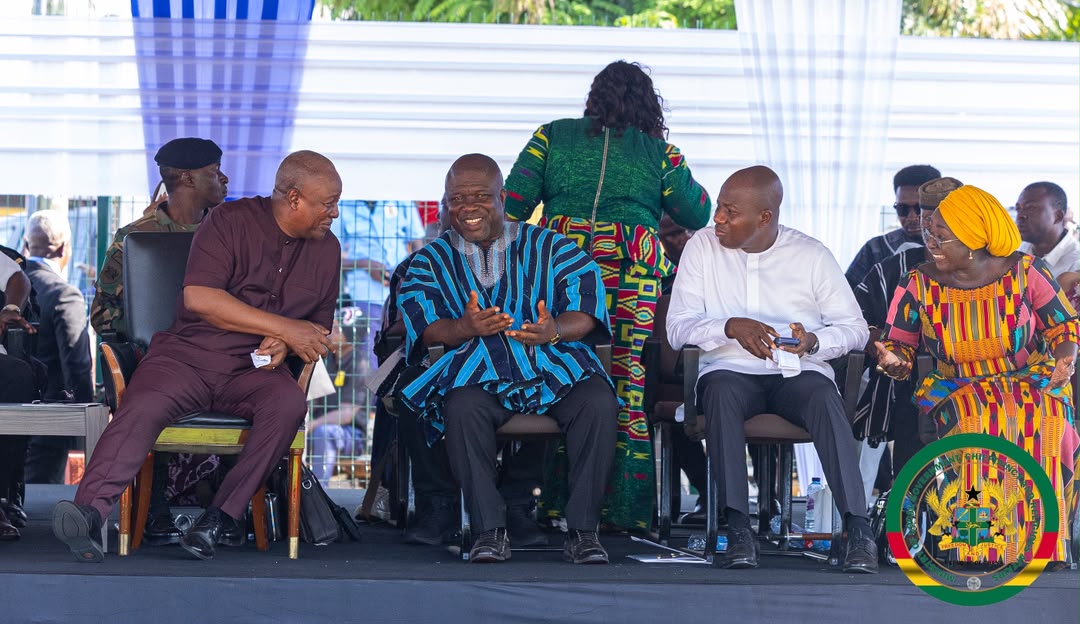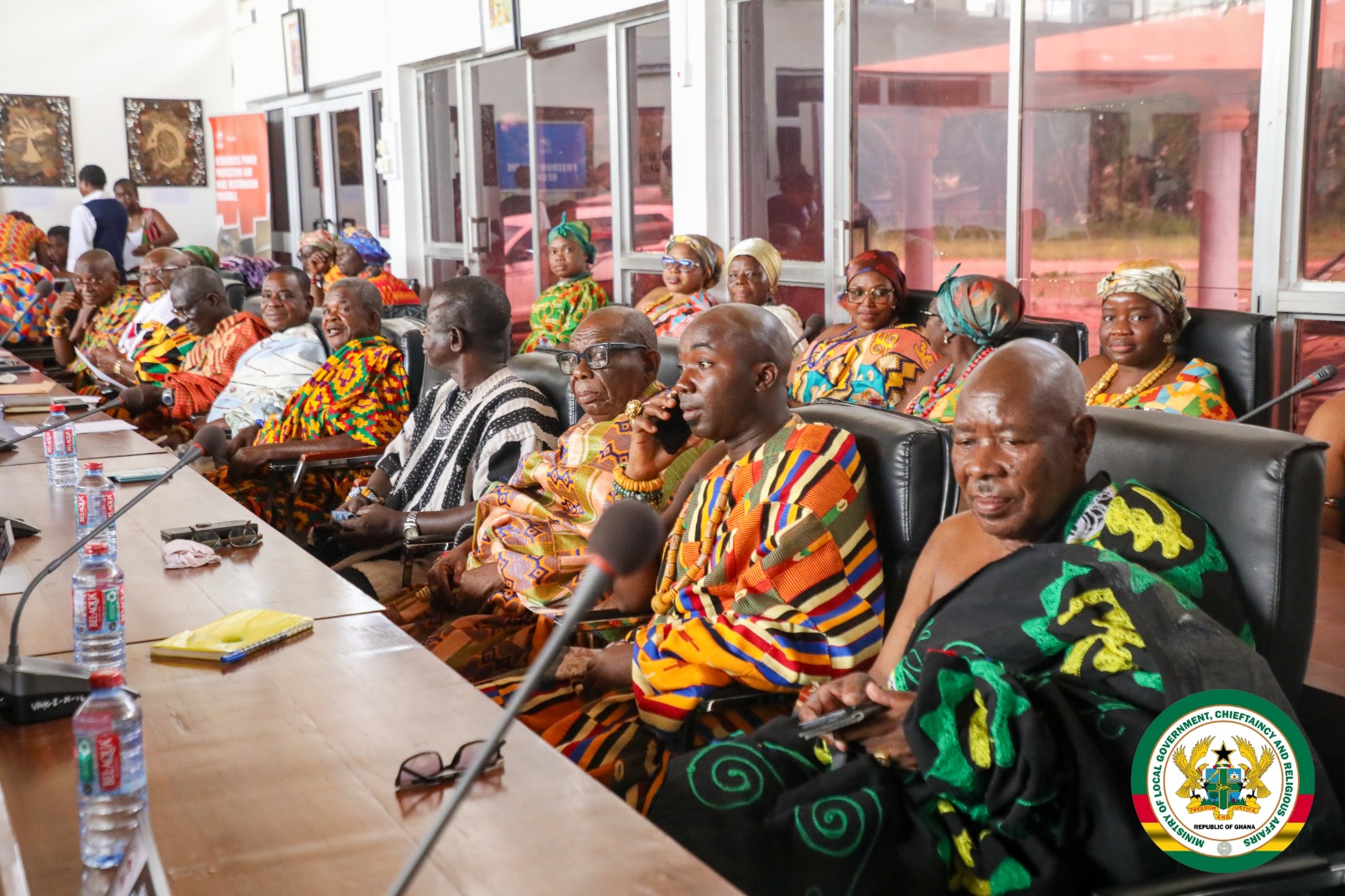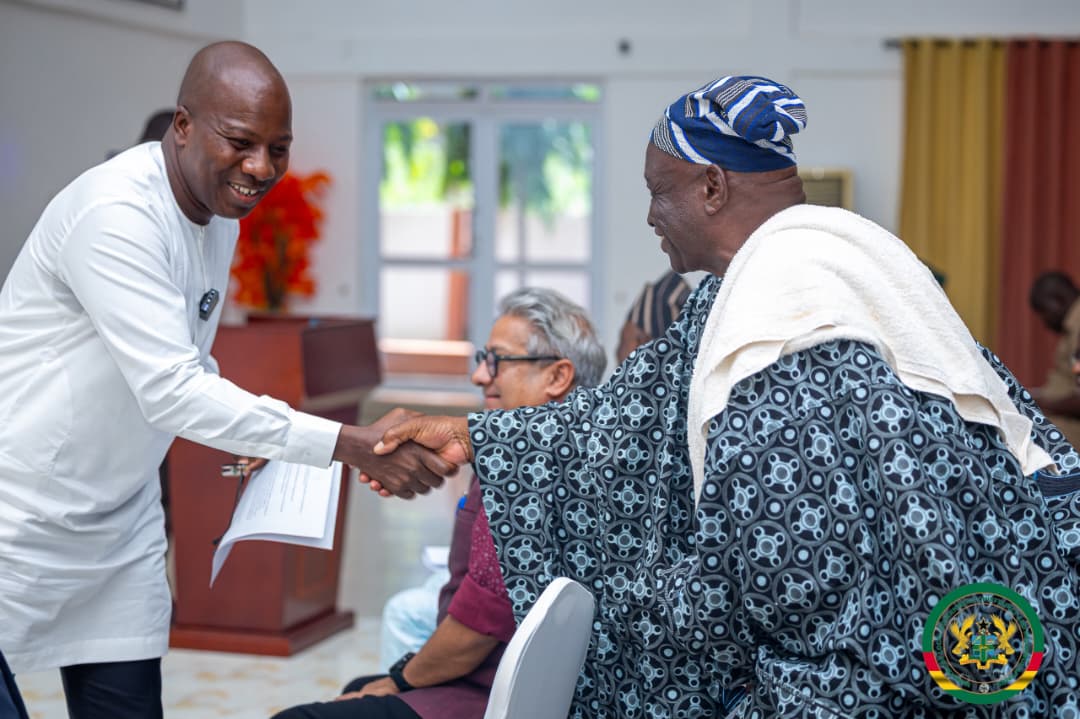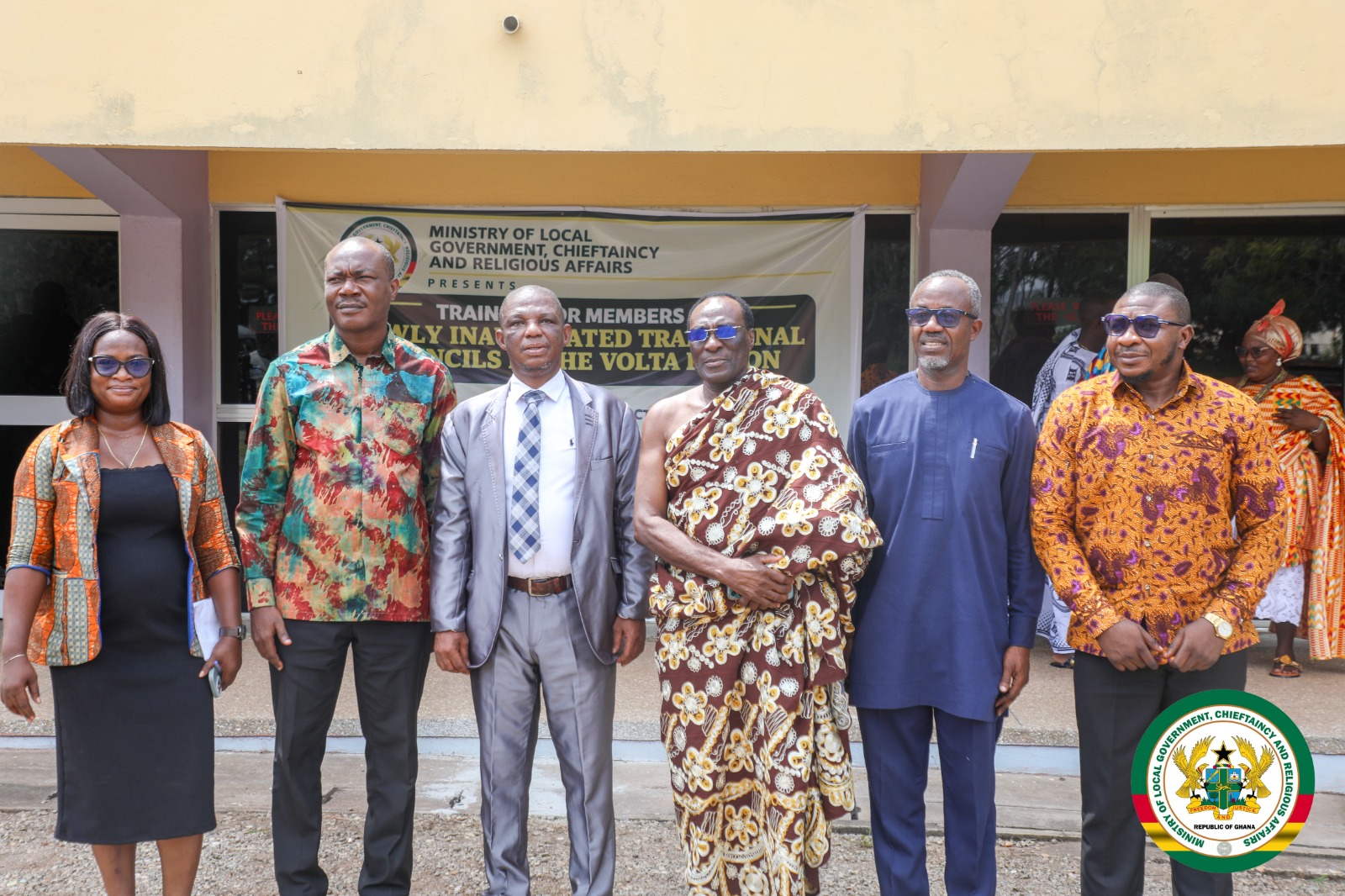
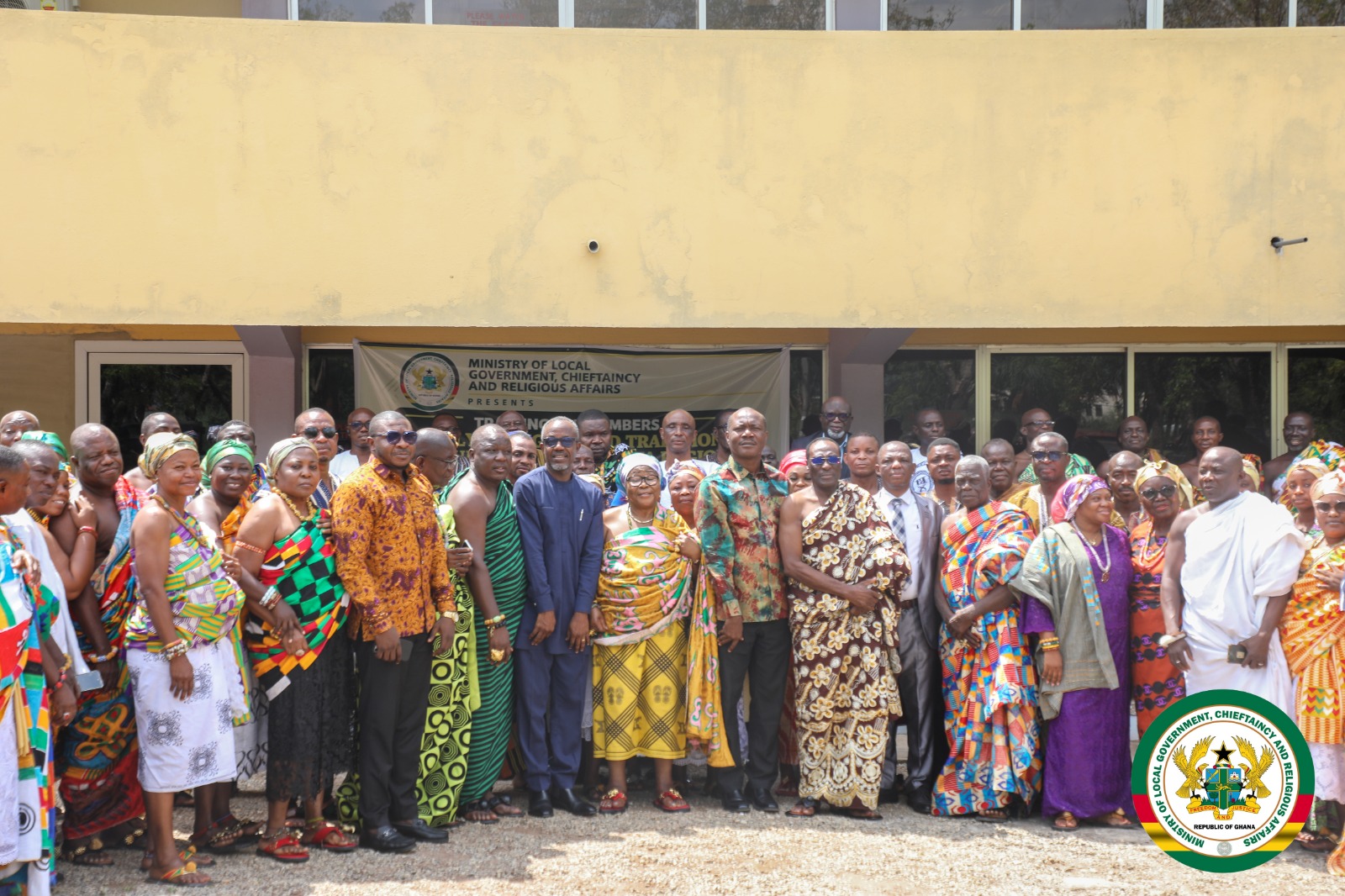
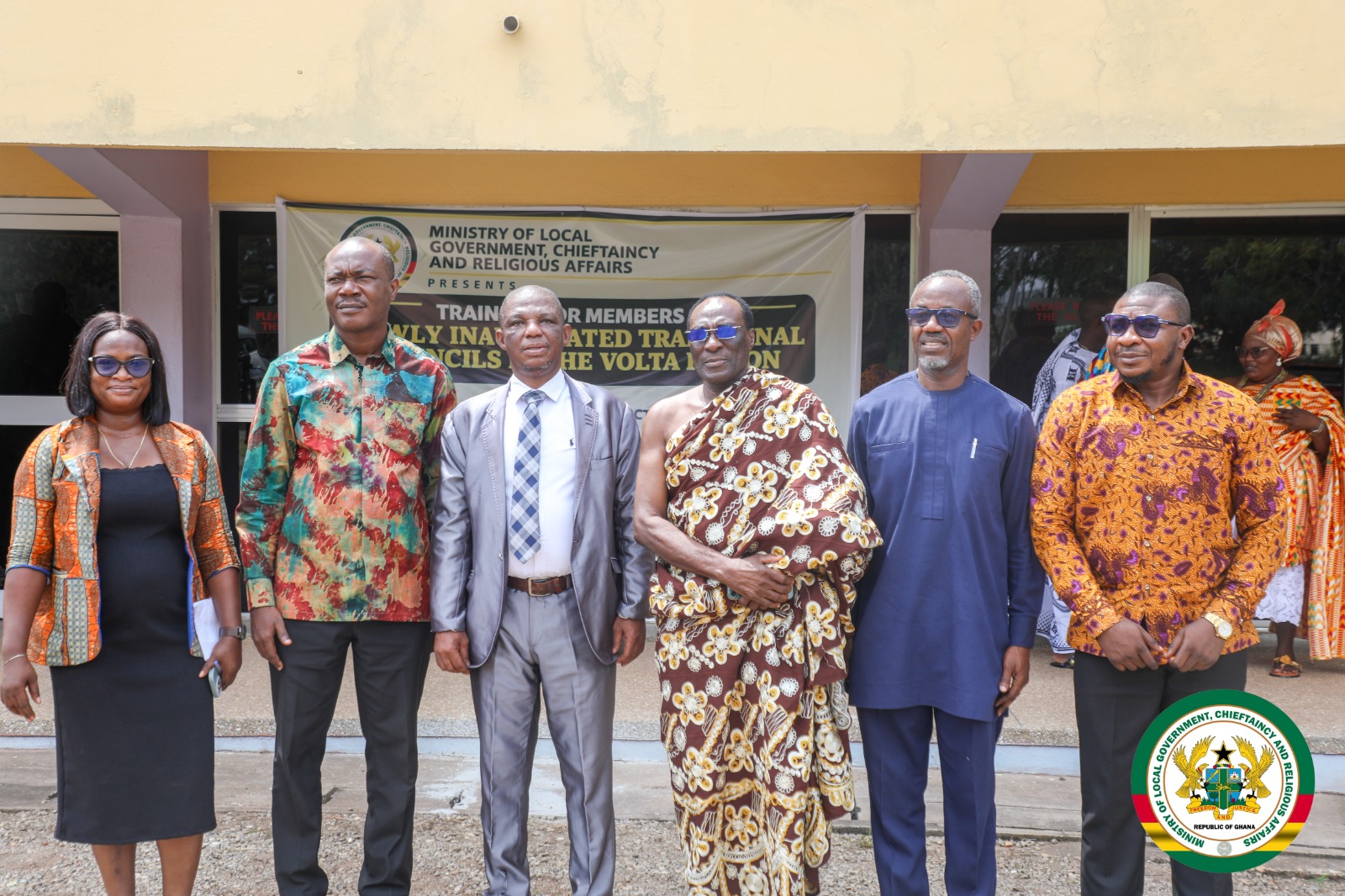
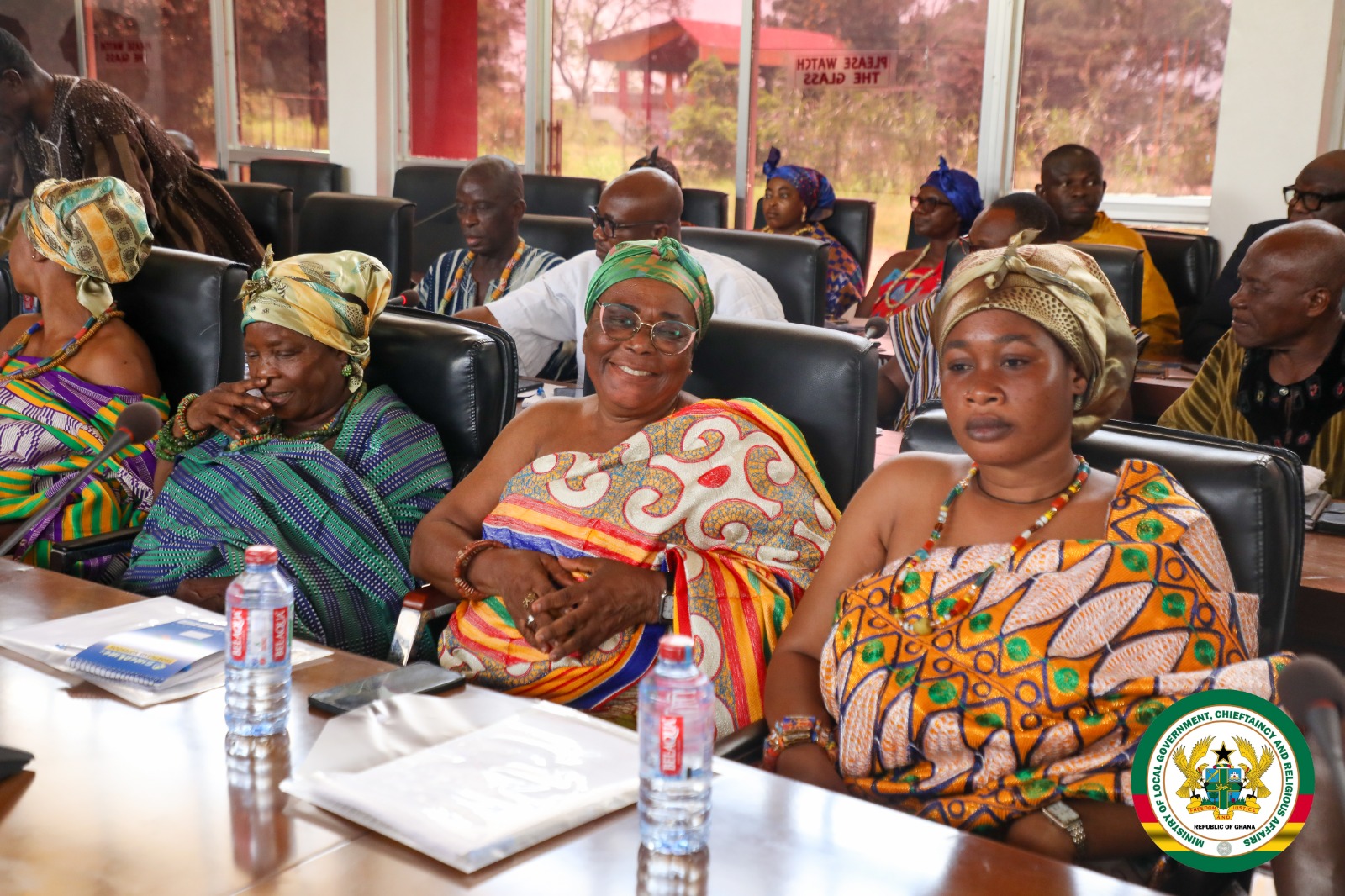
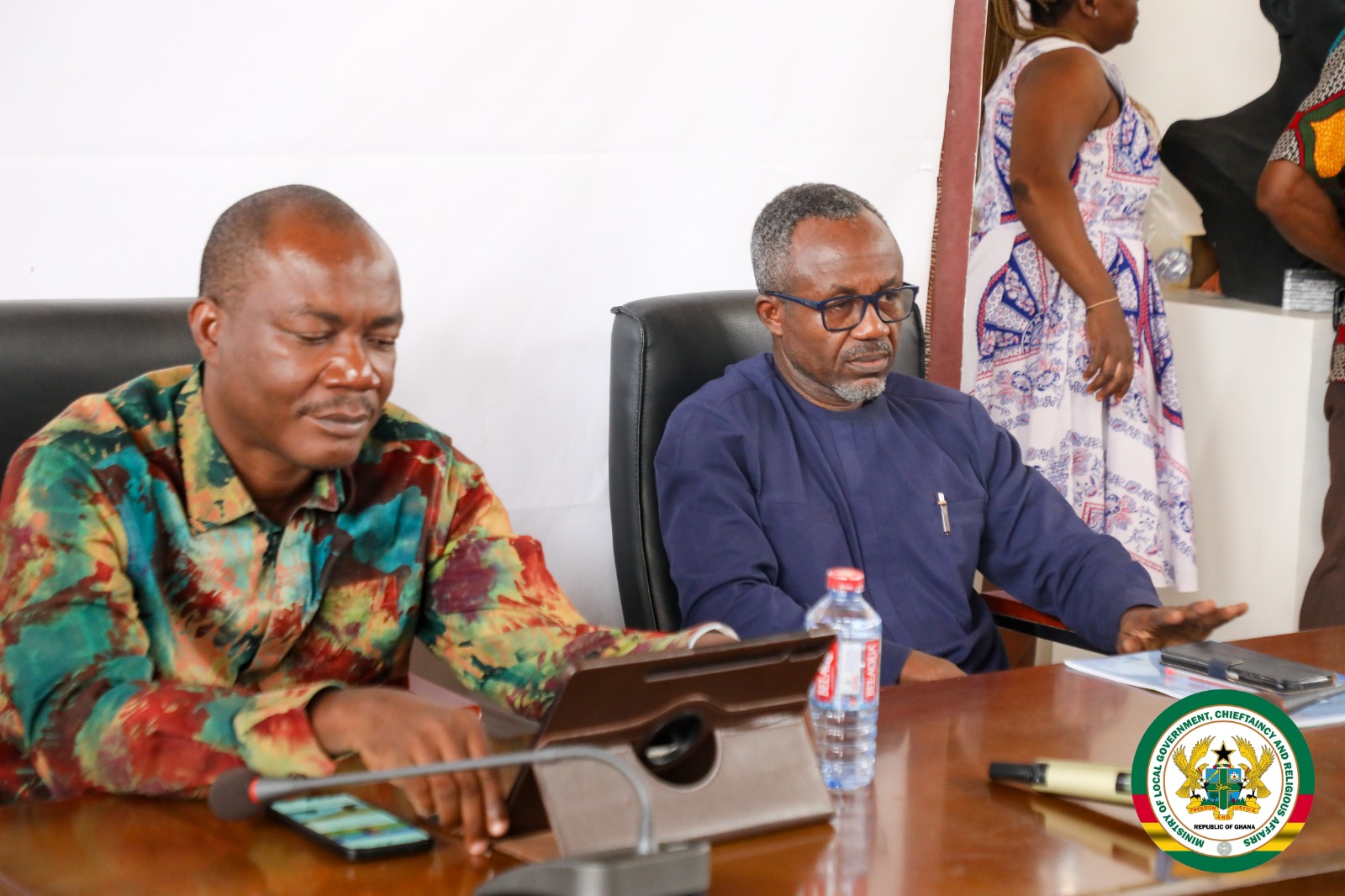
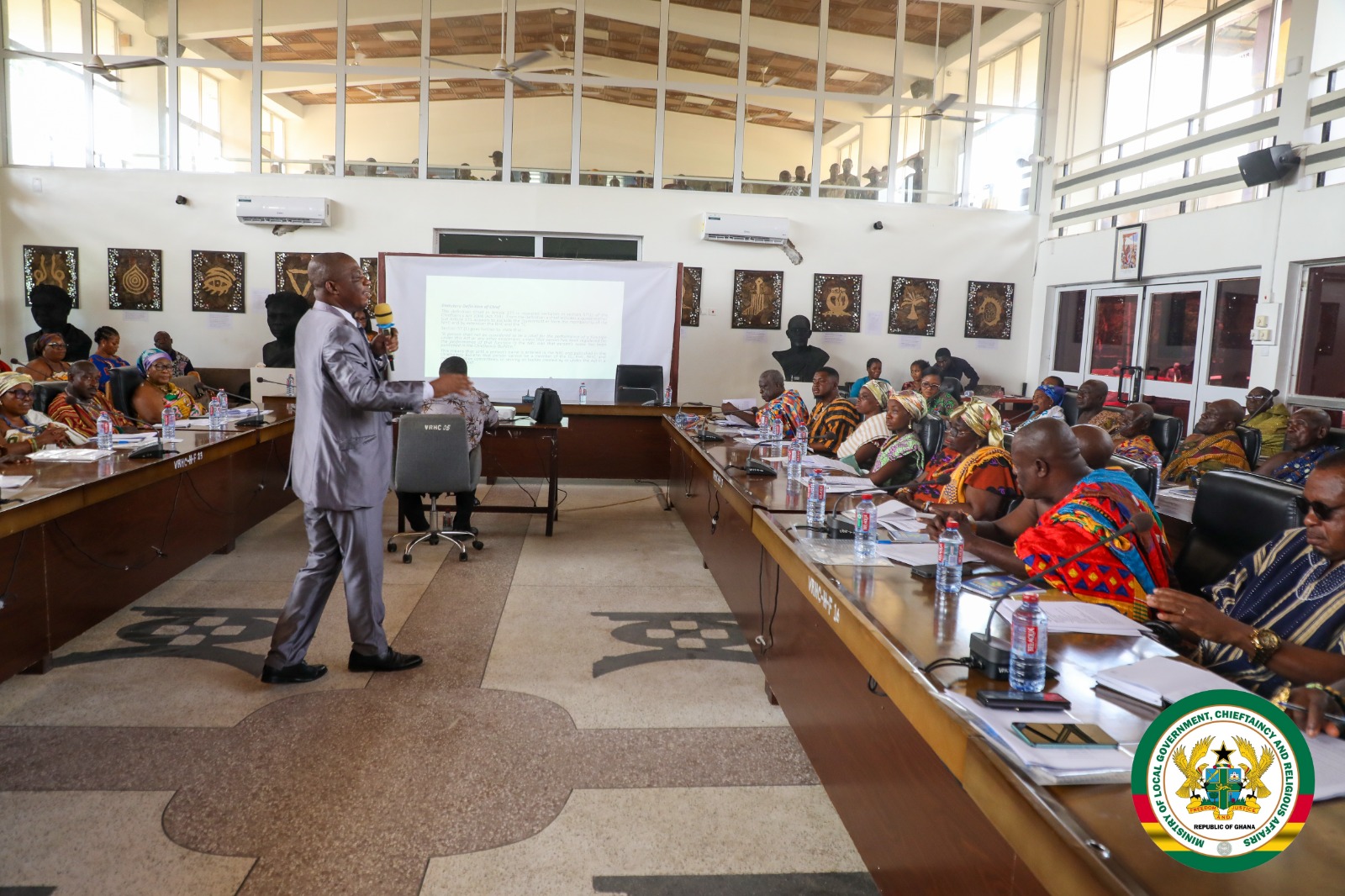
The Ministry of Local Government, Chieftaincy and Religious Affairs has commenced a capacity building programme for members of newly inaugurated Traditional Councils in the Volta Region, as part of efforts to strengthen chieftaincy administration and improve the effective discharge of their statutory responsibilities.
The training programme, held in Ho, in the Volta Region on Friday, October 30, 2026, follows the inauguration of approximately 70 Traditional Councils across selected traditional areas in the region in 2024.
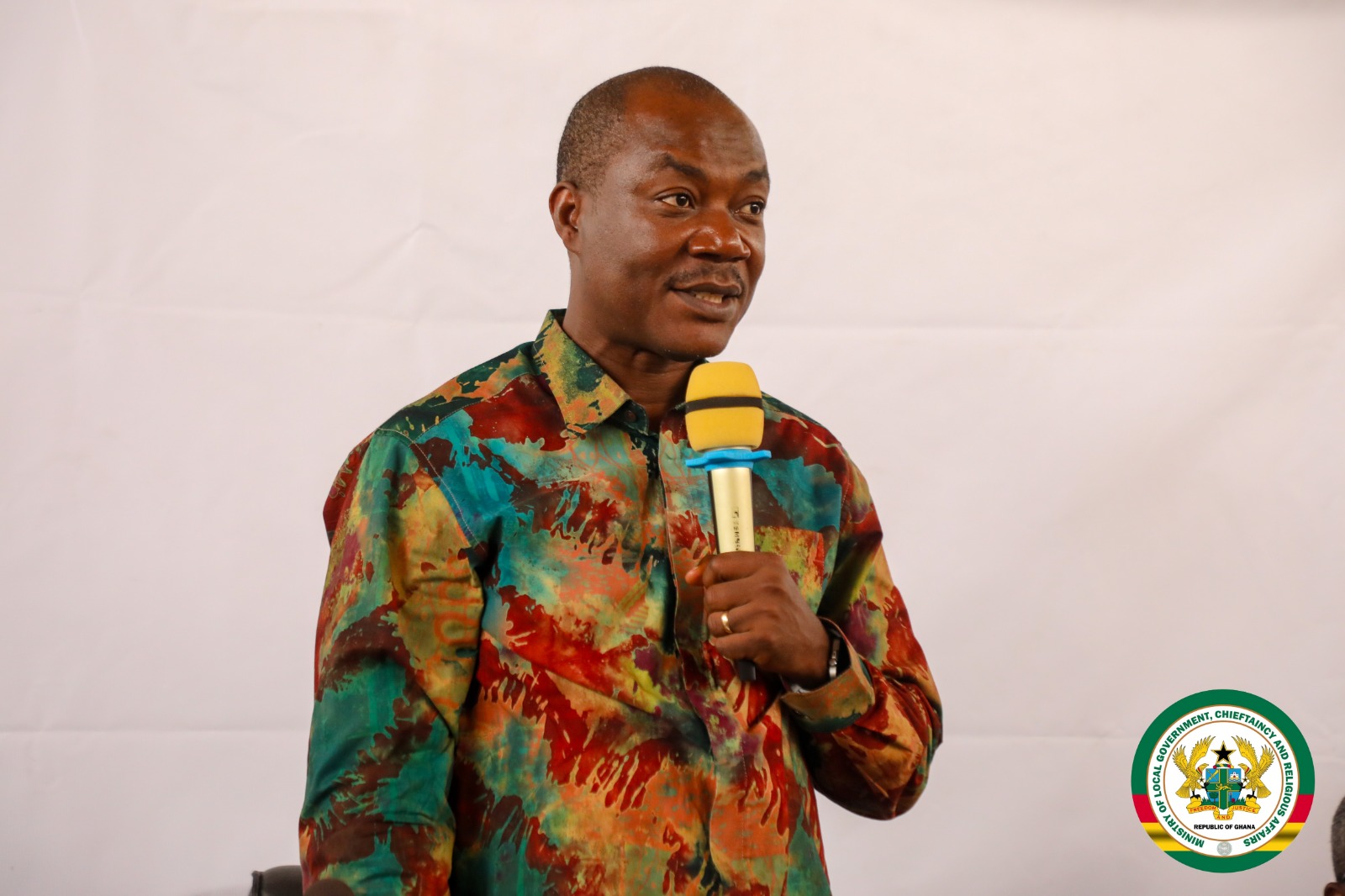
Delivering remarks on behalf of the Chief Director, Alhaji Amin Abdul Rahman, the Director for Chieftaincy and Religious Affairs, Mr Baafi Nsiah, said the training was a fulfilment of the Ministry's commitment to ensure that the establishment of the councils was matched with the requisite knowledge and skills to enable members to function effectively.
He explained that the programme represents the first phase of a broader initiative to strengthen the institutional capacity of the councils, particularly in administration, committee management, adjudication and community development.
Mr Nsiah emphasised that Traditional Councils have a significant legal mandate under the Chieftaincy Act, 2008 (Act 759), particularly Section 29(1), which grants them exclusive jurisdiction to hear and determine chieftaincy-related matters arising within their respective traditional areas, subject to the exceptions provided by law.
He also referenced Section 12(1) of the Act, which provides for the establishment of a Traditional Council in every traditional area, as well as Article 270 of the 1992 Constitution, which guarantees the institution of chieftaincy and its traditional councils.
He urged members to familiarise themselves with these legal provisions and ensure that their decisions are guided by the law, customary practices, fairness and the principles of natural justice.
The Director further highlighted the Government's recognition of traditional authorities as indispensable partners in national development, particularly in maintaining peace, preserving cultural heritage, mobilising communities and supporting local development initiatives.
He, however, stressed that institutional strengthening must be matched by commitment, discipline, accountability and a willingness by council members to apply the knowledge acquired.
Participants were encouraged to actively engage in the training, deepen their understanding of the jurisdiction and procedures of their respective councils, and ensure that chieftaincy disputes are handled fairly, impartially and through the appropriate legal processes.
Beyond dispute resolution, Mr Nsiah urged the councils to promote unity among traditional authorities and work closely with Assemblies, government agencies and other stakeholders to advance development in their communities.
Mr Nsiah called on participants to translate the lessons from the programme into practical improvements in their respective traditional areas, stressing that the success of the councils would ultimately be measured by their contribution to peace, stability, public confidence and grassroots development.
Source : Chantal Aidoo
Public Relations Unit ,MLGCRA