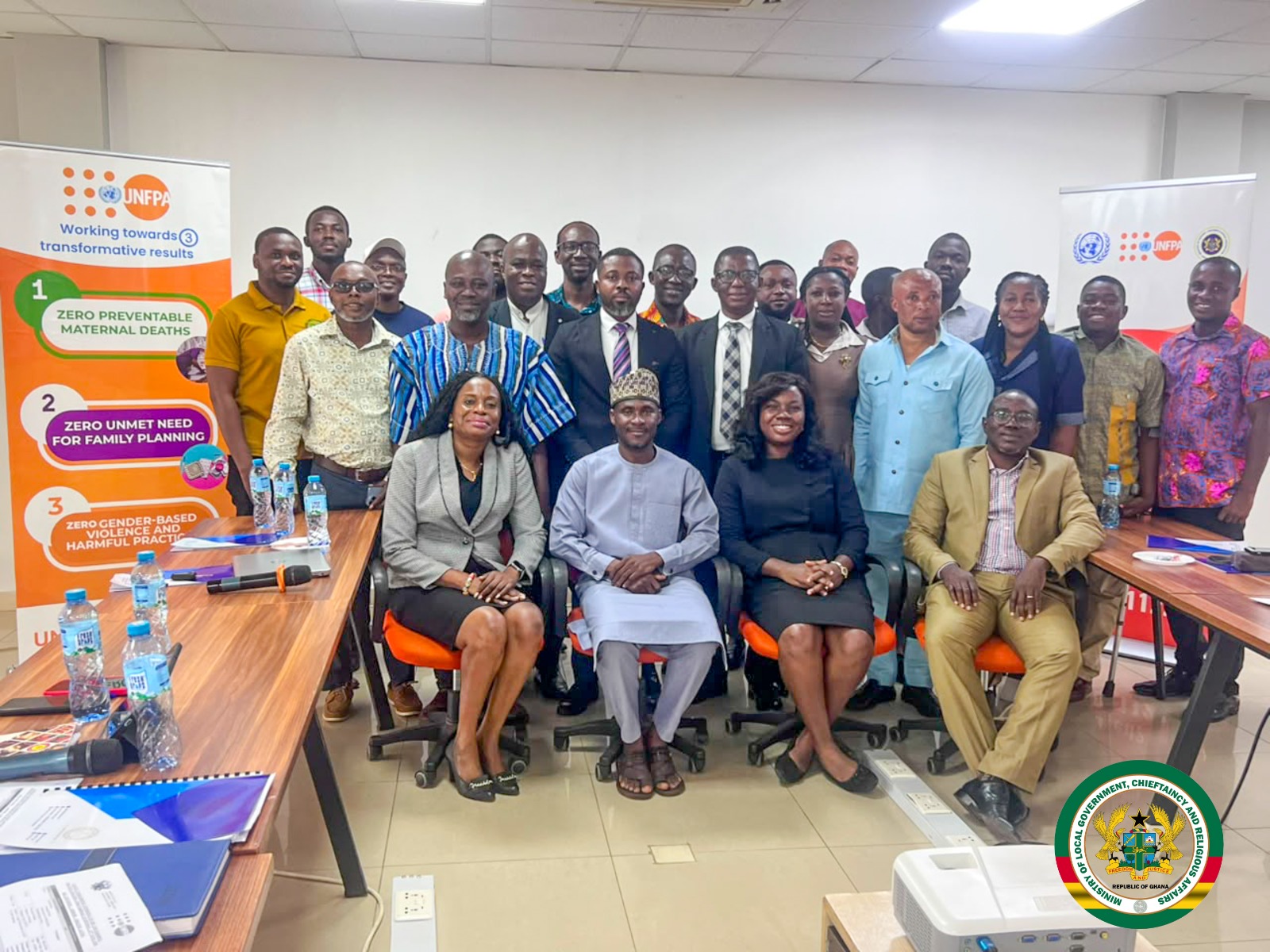
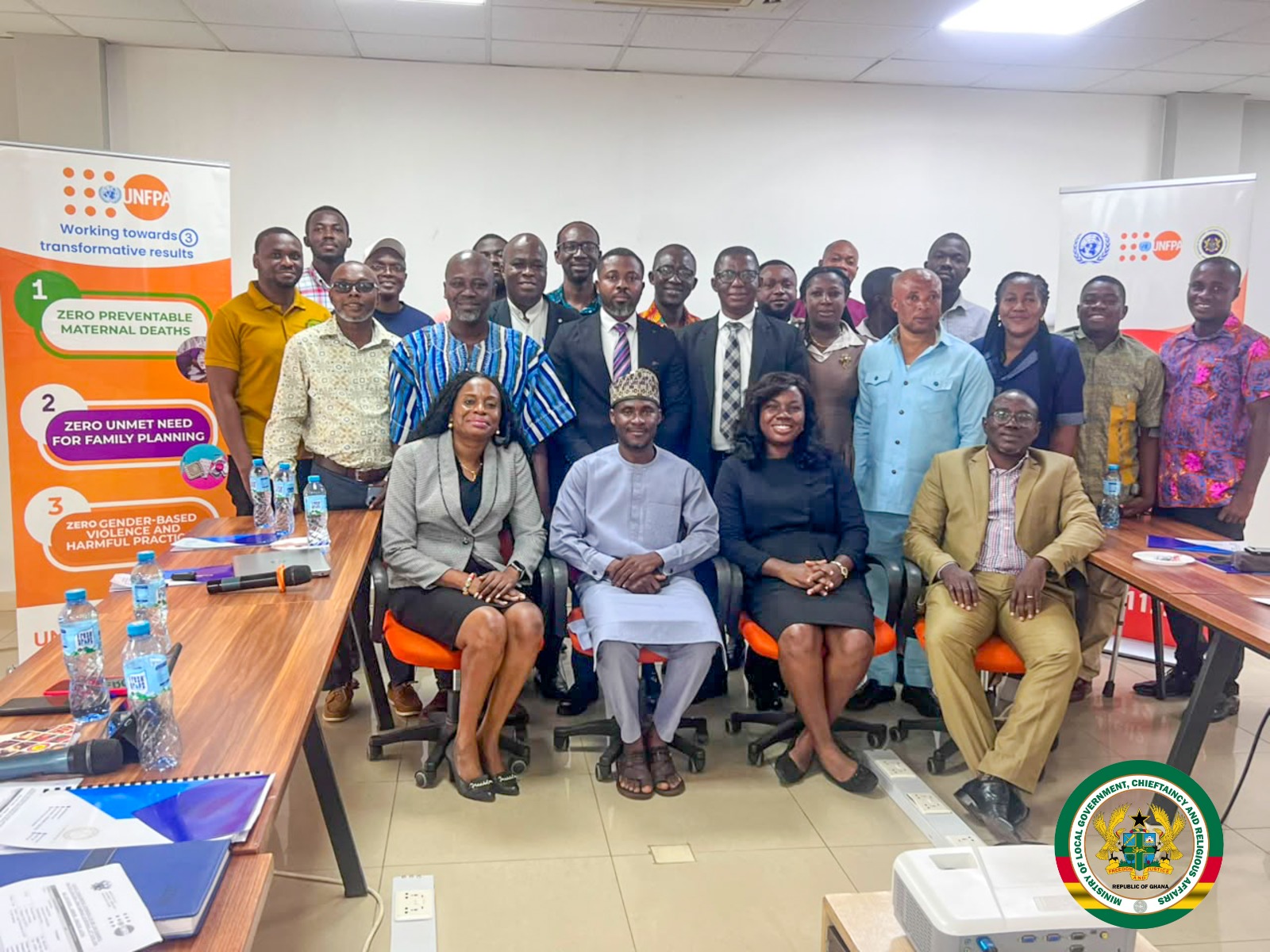
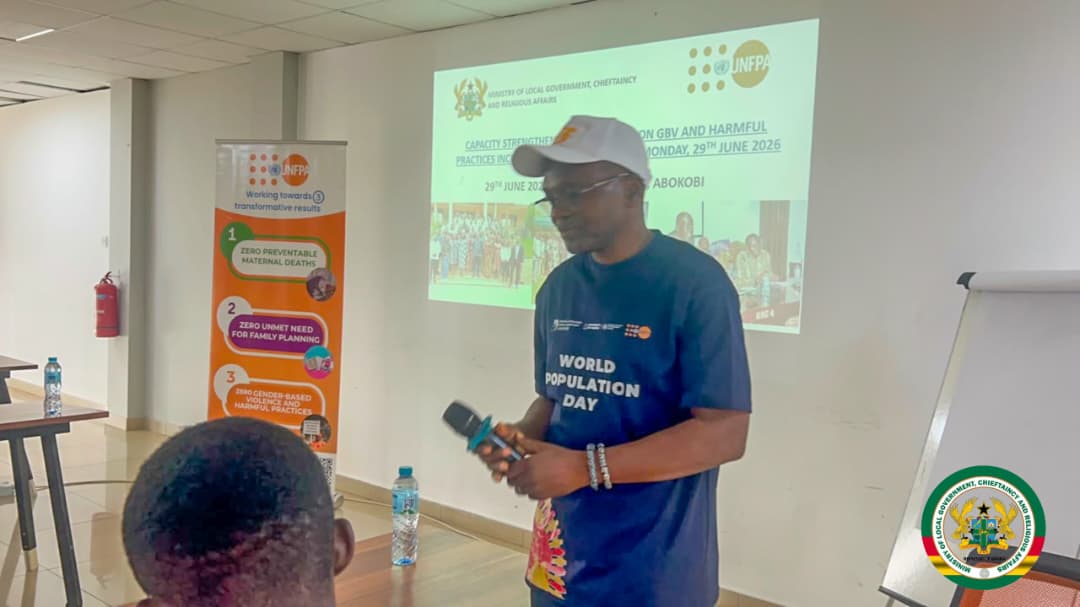
In efforts to combat gender-based violence and harmful practices with real data and fact-finding, the Ministry of Local Government, Chieftaincy and Religious Affairs (MLGCRA), in collaboration with the United Nations Population Fund (UNFPA), has organised a capacity-building programme for Research Officers and Legal Counsel to strengthen institutional efforts to address Gender-Based Violence (GBV), harmful practices, and child marriage.
The training which came of Monday, 29th June, 2026 in Accra, formed part of the Ministry's ongoing commitment to promoting gender equality, protect vulnerable groups, and enhance evidence-based policy implementation across the country's decentralised governance system.
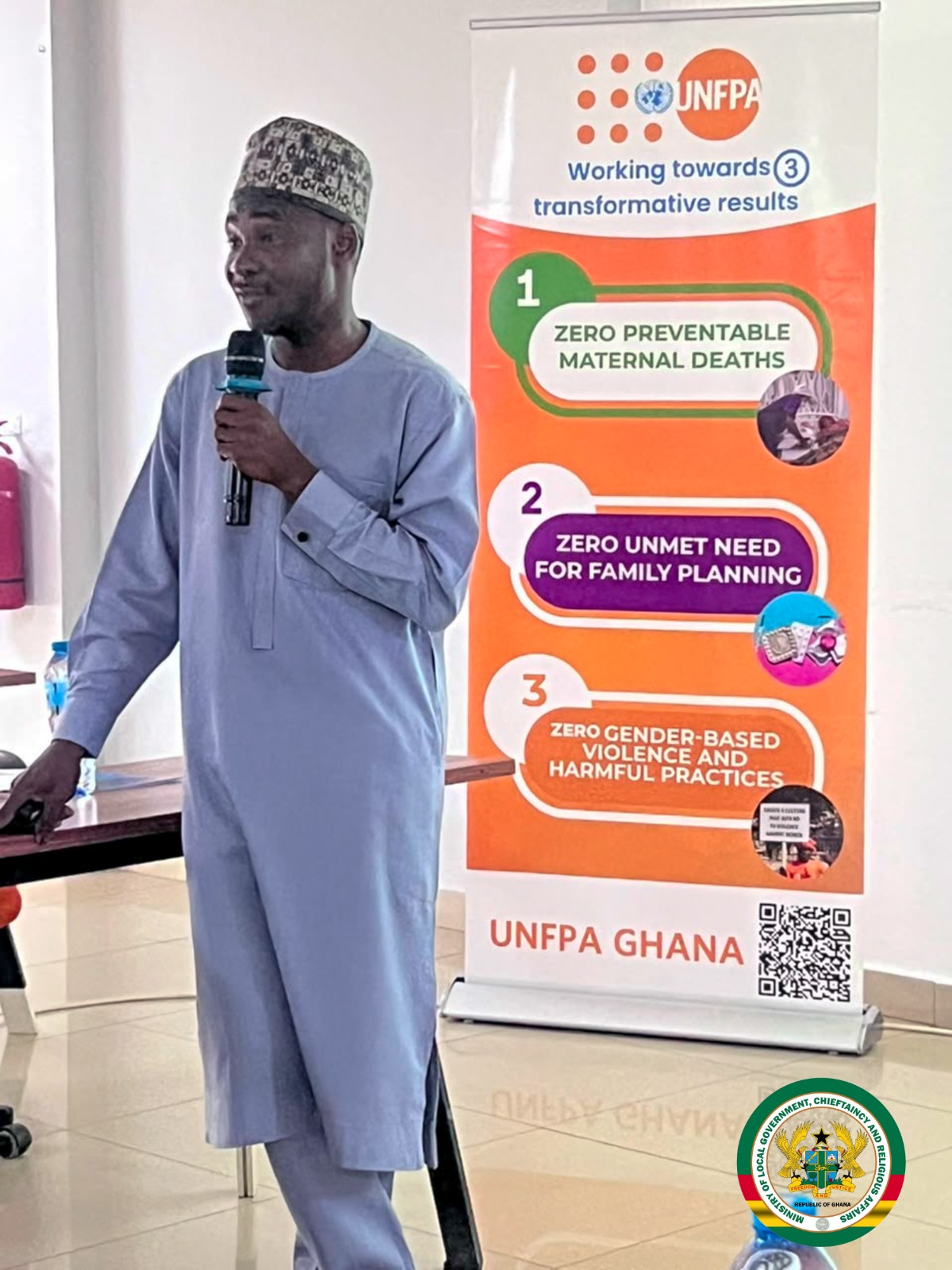
Speaking in a welcome address on behalf of the Ministry, the Focal Person for the programme, Mr Richard Obeng Boafo indicated that the training will equip participants with practical skills in data collection, analysis, reporting, and legal interpretation relating to GBV and harmful practices. It also focused on enhancing participants' understanding of the National Framework for Engaging Traditional Authorities, while integrating Sexual and Reproductive Health and Rights (SRHR) and Family Planning into research and legal advisory functions.
He underscored the indispensable role of Research Officers and Legal Counsel in supporting traditional leaders to make informed, lawful, and rights-based decisions. According o him, while Research Officers generate the evidence needed to shape policies and interventions at he Regional and Traditional Council level, Legal Counsel at the Regional Houses ensure that decisions and actions remain consistent with Ghana's legal framework and international human rights obligations.
Mr Boafo observed that despite ongoing interventions, Gender-Based Violence, child marriage, and other harmful practices continue to threaten the rights, dignity, and wellbeing of women and children. He was of the view that challenges such as underreporting, weak enforcement mechanisms, and deeply rooted socio-cultural norms require coordinated, evidence-driven, and legally sound responses.
Participants were encouraged to actively contribute to discussions, share experiences, and apply the knowledge gained to strengthen policy implementation, improve legal advisory services, and support traditional authorities in championing the elimination of harmful practices within their communities.
The training builds on several interventions already undertaken by the Ministry, including the declarations by Paramount Chiefs to end child marriage and teenage pregnancies in their traditional area, engagements with faith-based organisations and traditional leaders, capacity-building for registrars of traditional councils, and ongoing collaboration with the National House of Chiefs.
In his opinion, the National Programme Analyst and Representative of United Nations Populations Fund (UNFPA) , Mr Faisal Bawa said issue of Teenage pregnancy must not swept under the carpet rather teenage girls must be sensitized so they know the repercussions and how it can distort their lives. Data in this essence is very essential because it makes planning effective.
He was of the firm believe that when they is data, people will not shift blames rather work with data to solve ongoing issues of child marriage and adolescent pregnancy and the the numbers will help to also know progress of work done.
Source : Chantal Aidoo
Public Relations Unit, MLGCRA