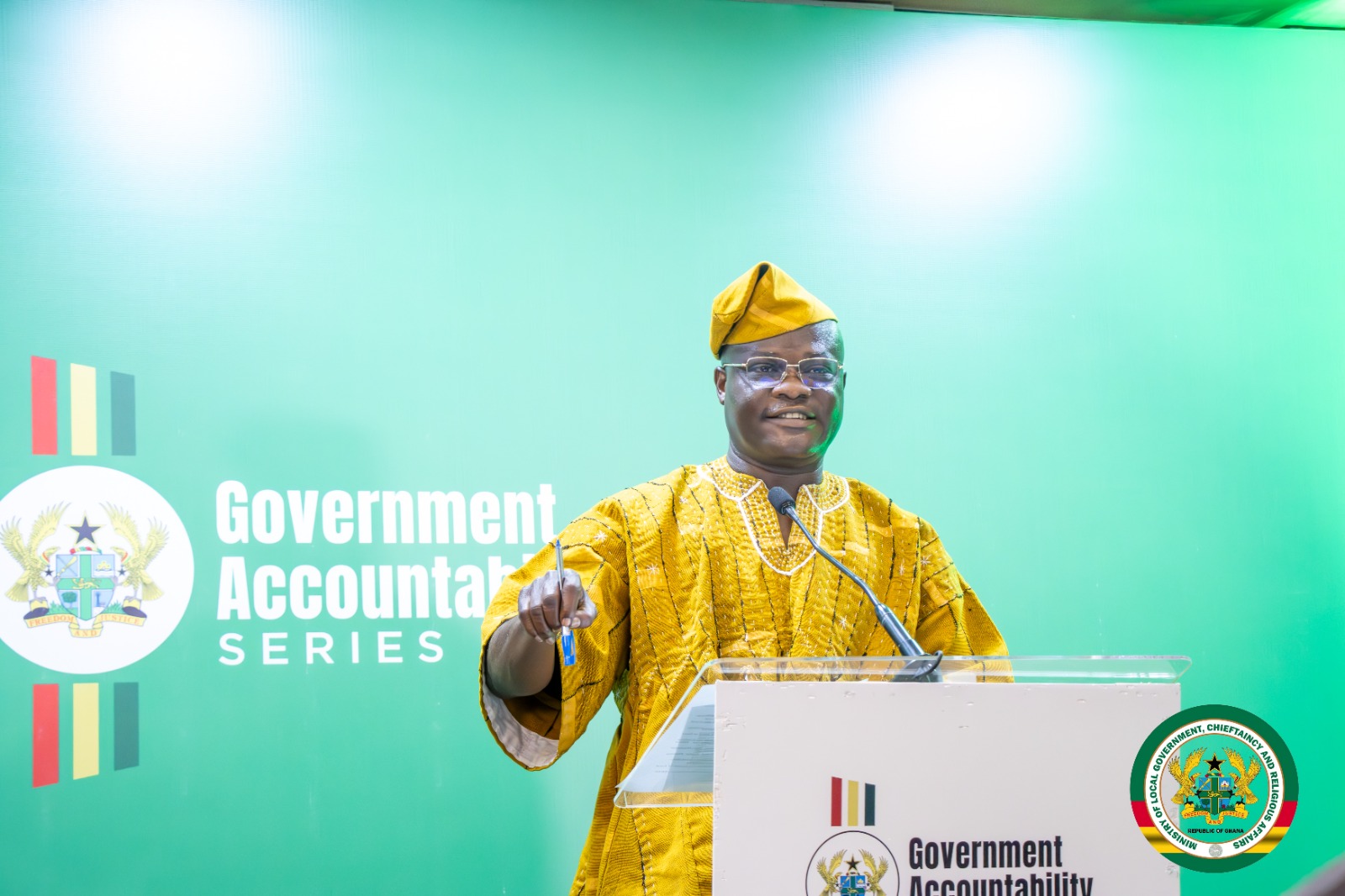
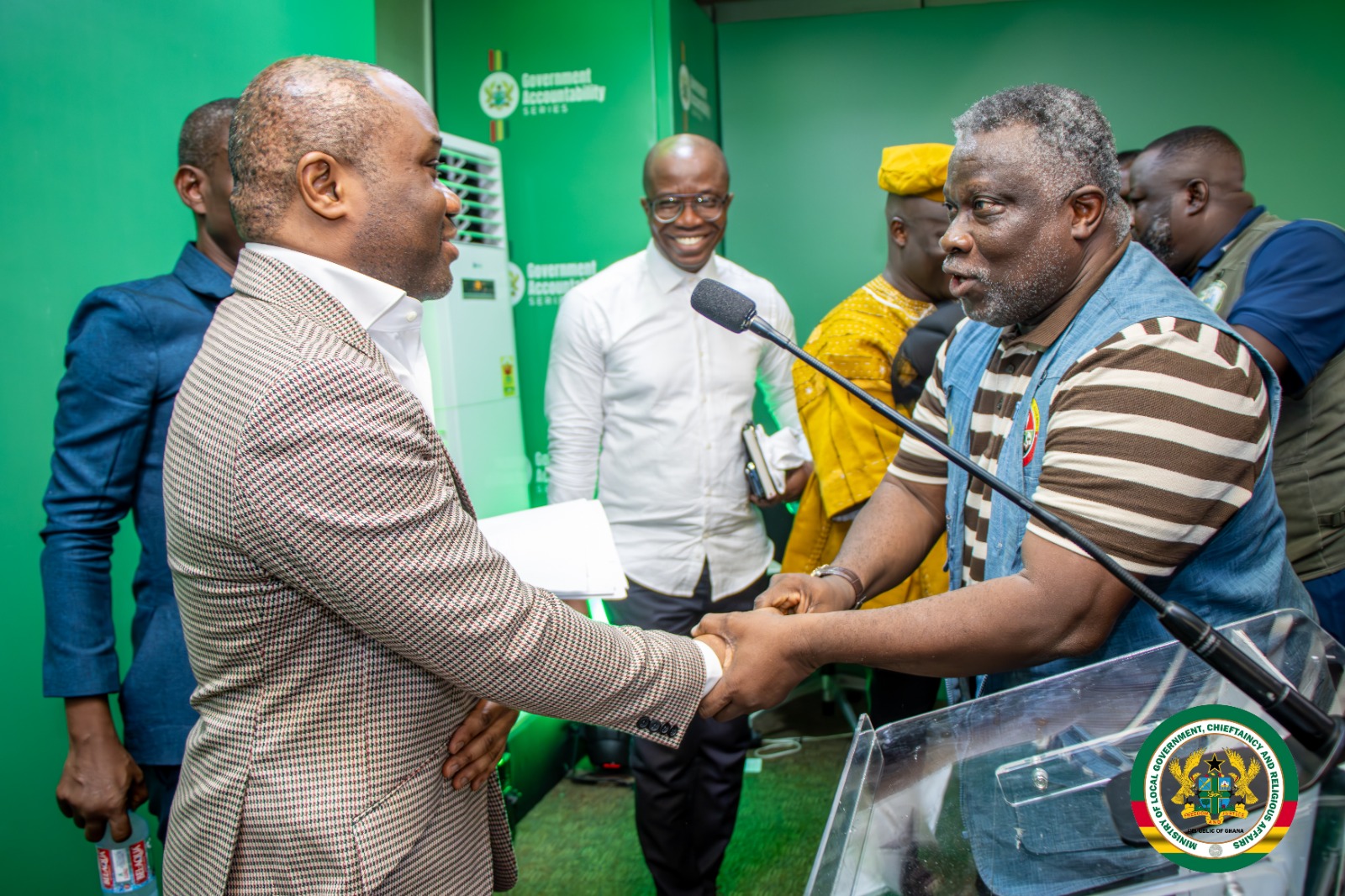
Hon. Ahmed Ibrahim, Minister for Local Government, Chieftaincy and Religious Affairs has said “ the government of H. E. John Dramani Mahama inherited in 2025 a dysfunctional local governance sector and decentralisation structure, occasioned by lack of adequate resources for Metropolitan, Municipal and District Assemblies (MMDAs) to fully discharge their statutory functions, a situation that affected service delivery and infrastructure development at the local level across the country”.
“The sector was characterised by deep-rooted challenges, particularly in the administration of the District Assemblies Common Fund (DACF). The Fund was not forthcoming regularly, and less than 50 percent was transferred directly to MMDAs. For nearly seven years under the previous administration, no guidelines were issued for the utilisation of the DACF as required under Section 126 of the Local Governance Act, 2016 (Act 936). Additionally, the statutory 5 percent of the DACF meant for disbursement to MMDAs was capped”.
Addressing the Government Accountability Series, the Minister for Local Government, Chieftaincy and Religious Affairs said the current administration has prioritised reversing these challenges by restoring fiscal discipline and ensuring that funds follow functions at the local level.
In 2025, the Ministry facilitated the transfer of all four quarters of the DACF to MMDAs, amounting to over GH¢5.03 billion. The releases have enabled assemblies to undertake critical development projects, including the construction of CHPS compounds, classroom blocks, boreholes and other legacy infrastructure across the country.
To further strengthen performance and accountability, the Ministry conducted the ninth cycle of the District Assemblies Performance Assessment Tool (DPAT) for all 261 MMDAs under the DACF Responsiveness Factor Grant programme. This resulted in securing over GH¢800 million to support assemblies in implementing activities captured in their Annual Action Plans.
As part of efforts to stimulate local economic activity, the government is advancing the 24-hour economy policy through the development of modern market infrastructure. The President recently cut sod for the commencement of flagship 24-hour model markets in Tamale and Bimbila, designed to integrate trading spaces with transport, storage, financial and social services.
The Ministry has also taken steps to strengthen traditional governance systems. In collaboration with the Ministry of Finance, monthly allowances for Paramount Chiefs have been increased from GH¢1,000 to GH¢3,000, while those of Queen Mothers have risen from GH¢800 to GH¢2,400, representing an increase of about 300 percent. Three quarters of these payments have already been made, a move described as unprecedented.
The Minister noted that these interventions form part of a broader reset agenda aimed at restoring efficiency, accountability and development at the local level.
He reaffirmed the Ministry’s commitment to deepening decentralisation and ensuring that local authorities are adequately resourced to deliver improved services and infrastructure to communities across the country.
In addition, all 261 Metropolitan, Municipal and District Chief Executives have been appointed, confirmed and oriented to restore administrative effectiveness across the assemblies. A Legislative Review Committee has also been established to facilitate amendments to the Local Governance Act, 2016 (Act 936), in line with ongoing reforms to deepen decentralisation.
Performance management systems within the local governance structure have been strengthened through the signing of performance contracts between the Office of the Head of the Local Government Service and Coordinating Directors at the regional and district levels.
Significant gains have also been recorded in infrastructure development under programmes such as the Ghana Secondary Cities Support Programme, which has delivered markets, transport terminals, road networks, drainage systems and street lighting across several municipalities.
On sanitation, the Ministry has reintroduced the National Sanitation Day and deployed logistics and operational systems to support improved waste management, particularly within the Greater Accra Metropolitan Area.
Social protection interventions have also been expanded, with thousands of vulnerable individuals benefiting from livelihood support programmes, employment opportunities and financial disbursements under various government initiatives.
The Minister further indicated that projected DACF disbursements over four years under the current administration are expected to exceed the total amount released over the previous eight-year period, underscoring a significant shift in policy direction and commitment to local development.
SOURCE: Darling Maame Efua Cann
Public Relations Unit- MLGCRA